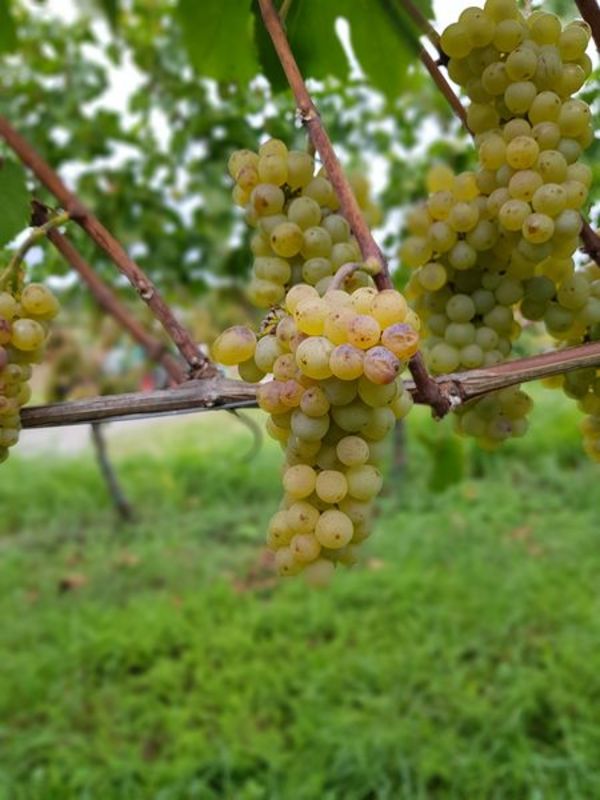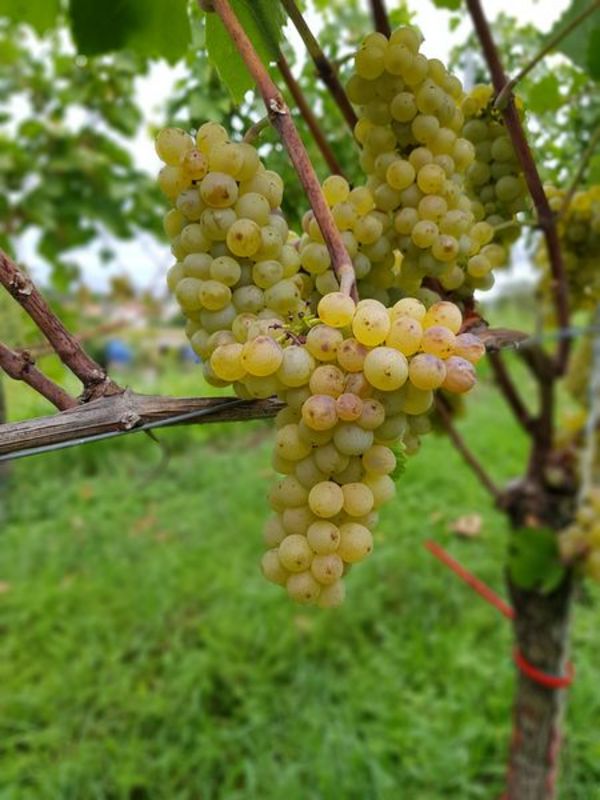
Pinot blanc

Origin:
Probably a very old mutation of Pinot noir.
Synonyms:
Blanc de Champagne, Pinot Chardonnay, Pinot Bianco, Weißer Burgunder, Weißburgunder
Requirements to the vineyard site:
They could be called medium, a bit lower than Pinot noir and Pinot gris.
Spread:
In Germany in almost all wine-growing regions, with a focus on Baden, Palatinate, Rheinhessen, Nahe and Mosel. Until the 1980s, Pinot Blanc and Chardonnay were not really differentiated in many areas. They were planted together and mostly marketed as Pinot Blanc.
It is also mainly found in Italy, Austria and France.
Clones:
The variety of Pinot Blanc clones is not yet so developed. However, the clone desired by all is usually loose-berried, small-berried or mixed-berried. As Pinot Blanc generally produces high yields, one breeding goal is also a lower yield, which is usually aimed for with small- and mixed-berry clones.
| traditional clones | productive and loose clones | yield-reduced clones |
| FR 70 | 1 Gm | 4 Gm Serie |
| FR 72 | S1 Selektion | |
| FR 74 | ||
| D 209 | ||
| D 212 | ||
| N 81 | ||
| 90 Gm | ||
| FR 2101 | ||
FR 70
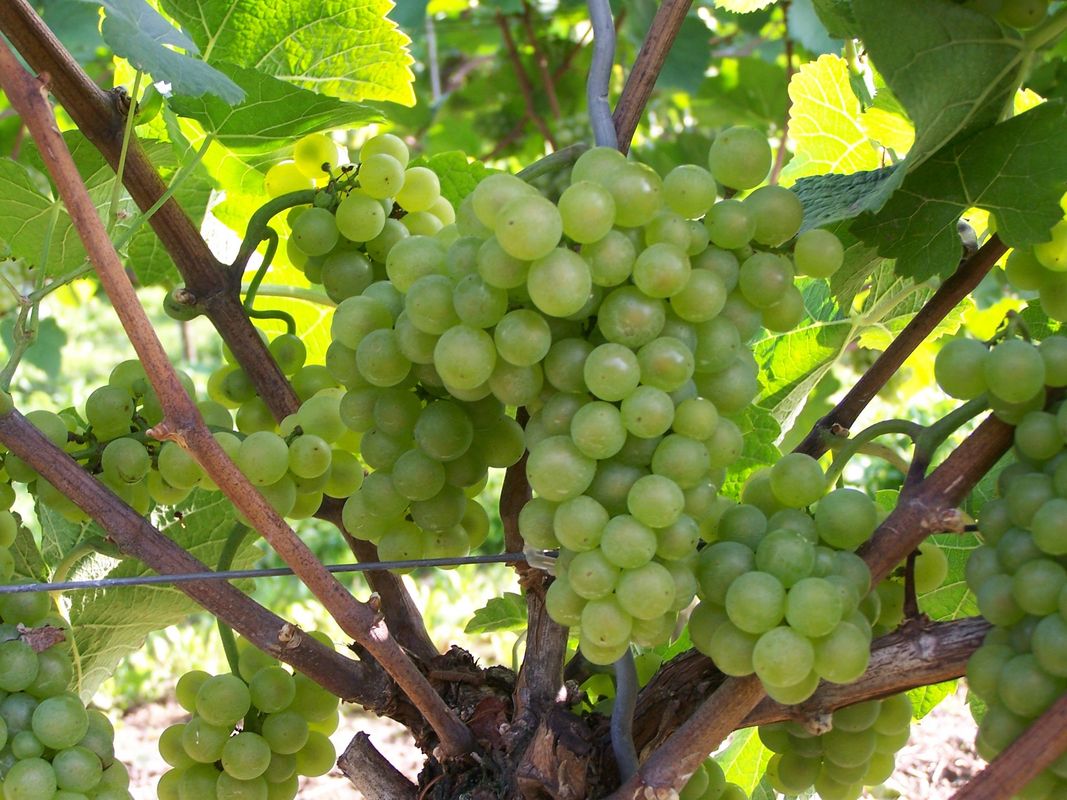
This clone and D 209 are the so called "Standard clones" which are planted in most cases. It has a good procutivity. The berries will start getting yellow when they are ripe




D 209


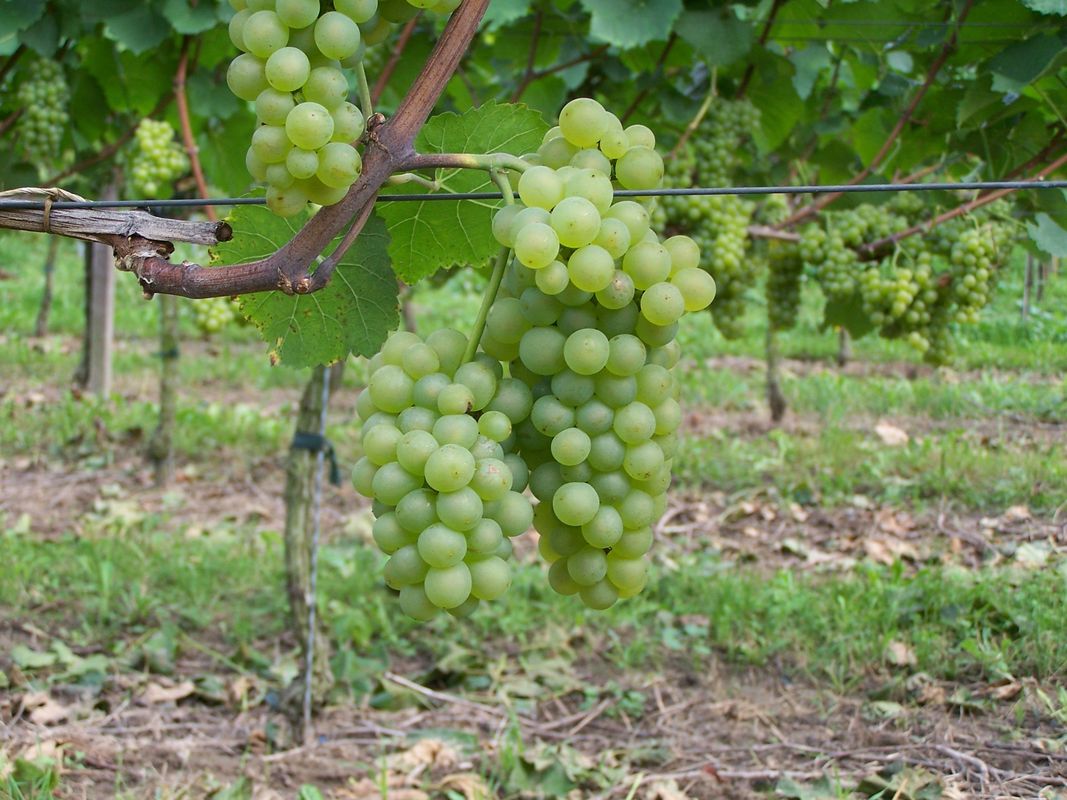


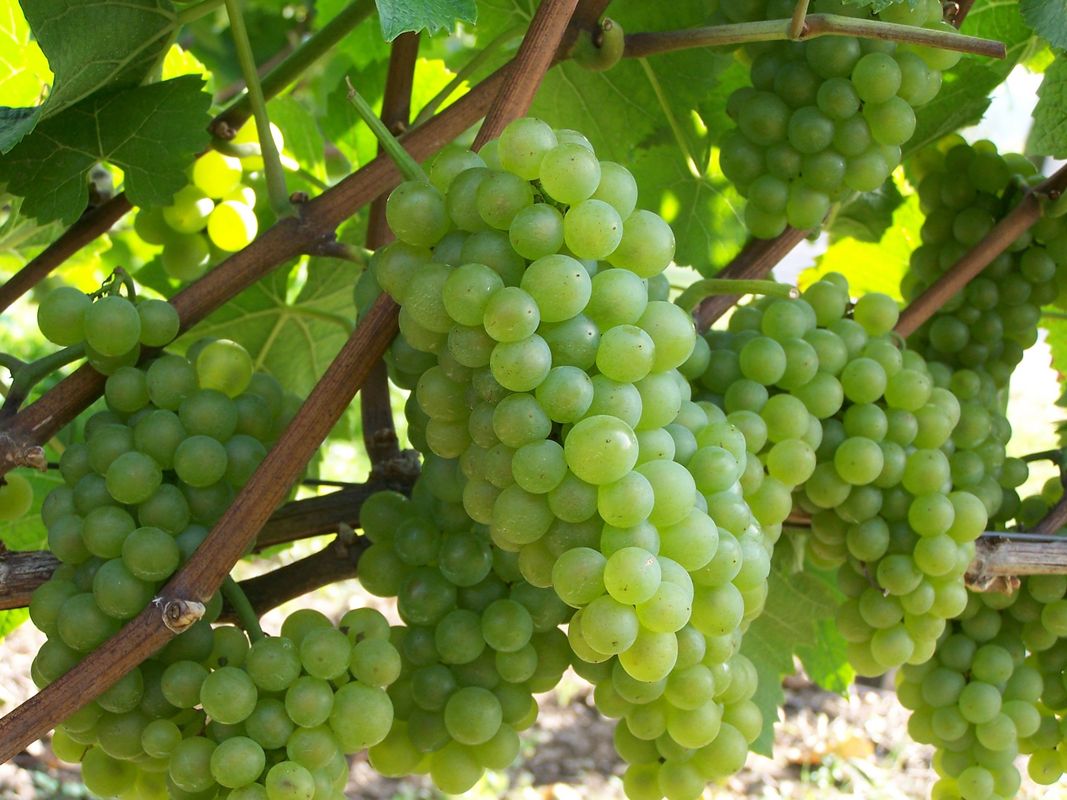
This clone is very similar to FR 70. But it is the more greenish typ. This means the berries will stay longer green, even when they are ripe. But the sugar content is more or less the same as the one from FR 70.
FR 74
This clone is in our clonal trials similar to clone FR 70. In long term evaluations of the Selector (Weinbauinstitut Freiburg) it has a slightly higher sugar content with minimal loss of productivity.


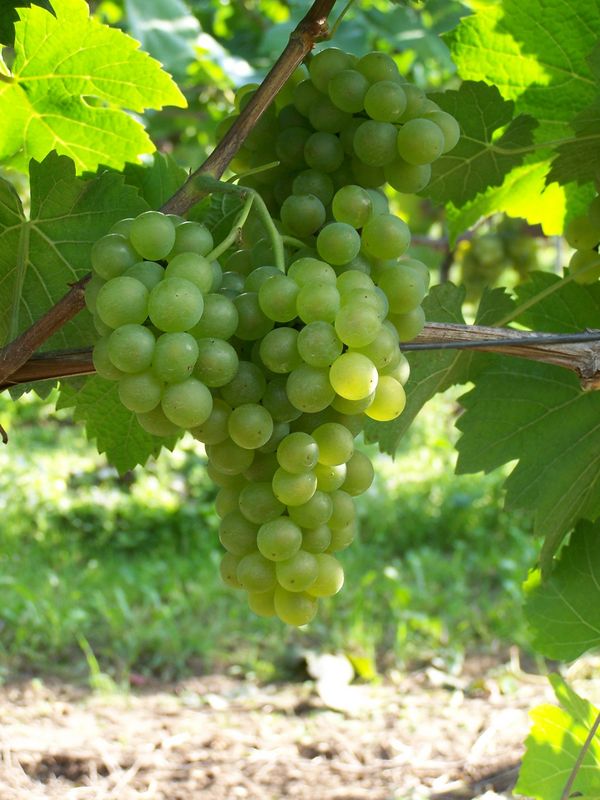
90 Gm
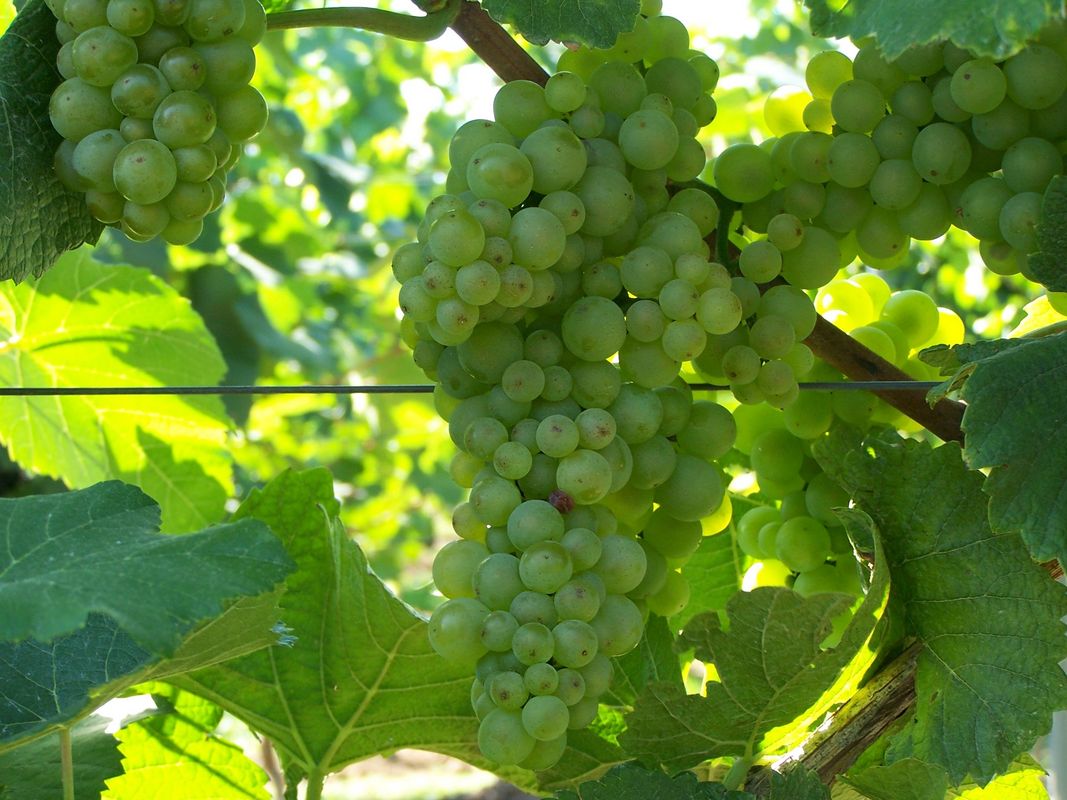


Clone 90 Gm is a clone from Geisenheim. It was collected in Baden with the aim to get loose bunches. A slight tendency to looser grapes is therefore noticeable especially when grafted on strong rootstocks..
N 81


The N 81 is an older clone in Germany. He is experiencing a certain renaissance at the moment, as he is sometimes described as slightly having loose bunches.
FR 2101


This is a recent clone of the Weinbauinstitut in Freiburg. Loose bunches paired with good wine quality was also here the breeding goal. Partly you can see that.
1 Gm

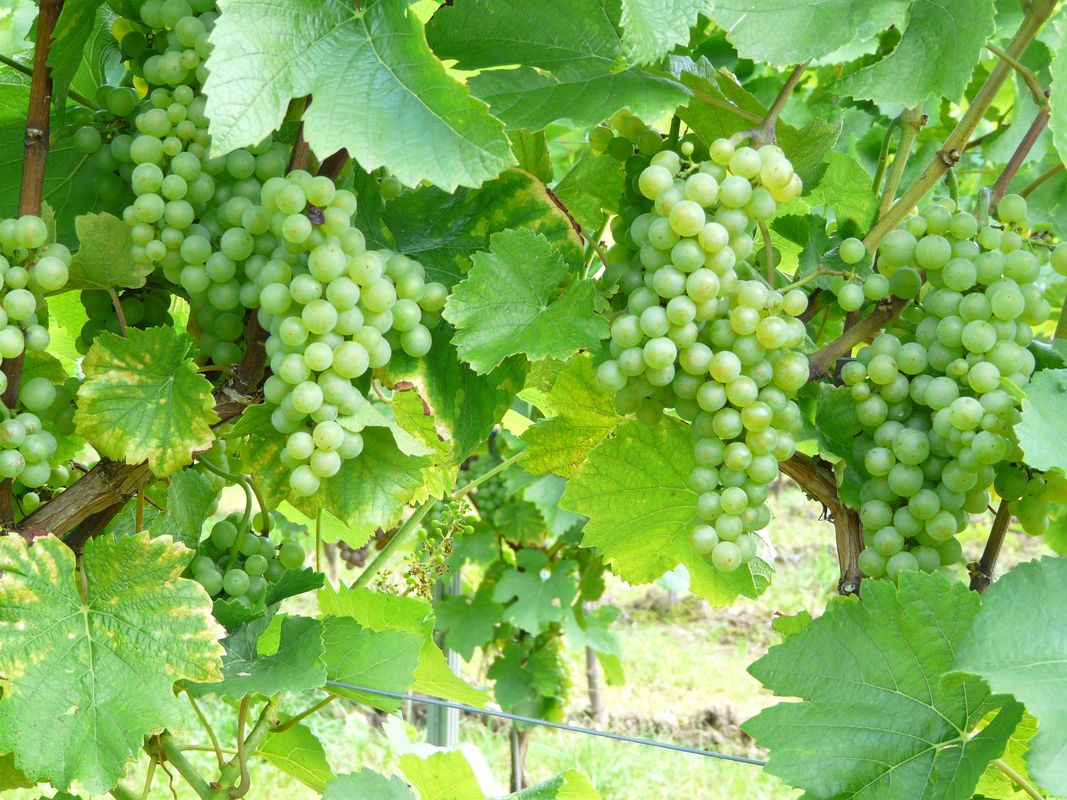


This is a relatively new clone from Geisenheim.
Good yield and more loose bunches are often present in this clone.
4 Gm series


This series of 3 clones (4-1 Gm, 4-2 Gm, 4-3 Gm) is intended for the production of high-quality Pinot Blanc wines. The relatively small, loose grapes allow yields of around 100 kg/ar.
However, this series is a good complement to the current clones, as these usually produce significantly higher yields. Lower yields can now also be produced without a great deal of labour for the green harvest.
S1 - our own selection
Our first own selection, the S1, has smaller, looser grapes. This makes it predestined for expressive Pinot Blanc wines. It is very reminiscent of the Pinot Gris clone 457.
The yield is lower than most Pinot Blanc clones, but very similar to the 4Gm series from Geisenheim. Depending on the year, yields of 90 to 120 kg per ar are normal.